
Time
Seoul/Tokyo (UTC+9): Wednesday, August 26, 21:00
London (UK, BST, UTC+1): Wednesday, August 26, 13:00
Lisbon (Portugal, WEST, UTC+1): Wednesday, August 26, 13:00
UTC: Wednesday, August 26, 12:00
New York (EDT, UTC−4): Wednesday, August 26, 08:00
Chicago (CDT, UTC−5): Wednesday, August 26, 07:00
Los Angeles (PDT, UTC−7): Wednesday, August 26, 05:00
Download the webinar poster
Join the Webinar
Online submission: https://www.oaecenter.com/login?JournalId=ions
An APC waiver will be granted for all manuscripts accepted before December 31, 2028.
Chair
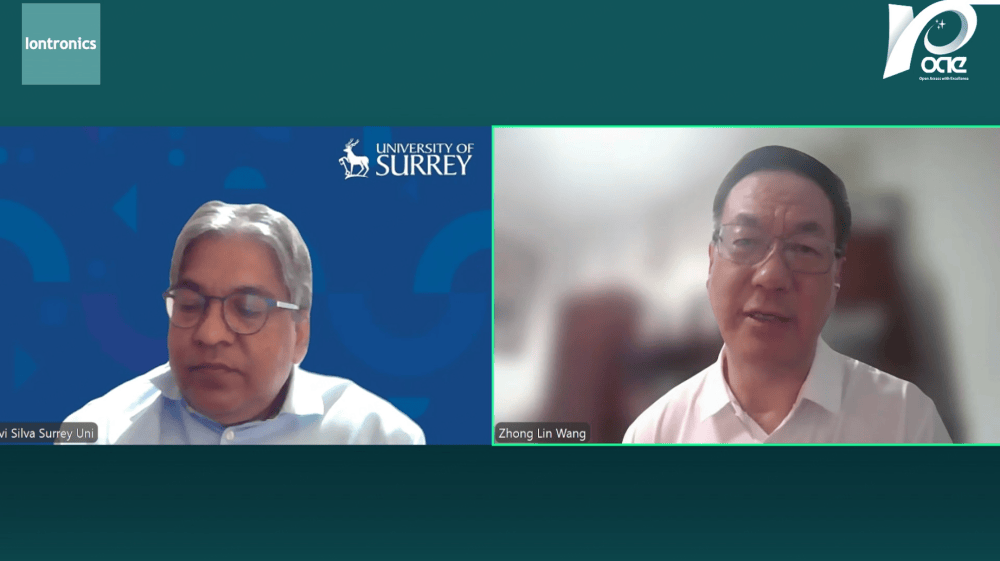
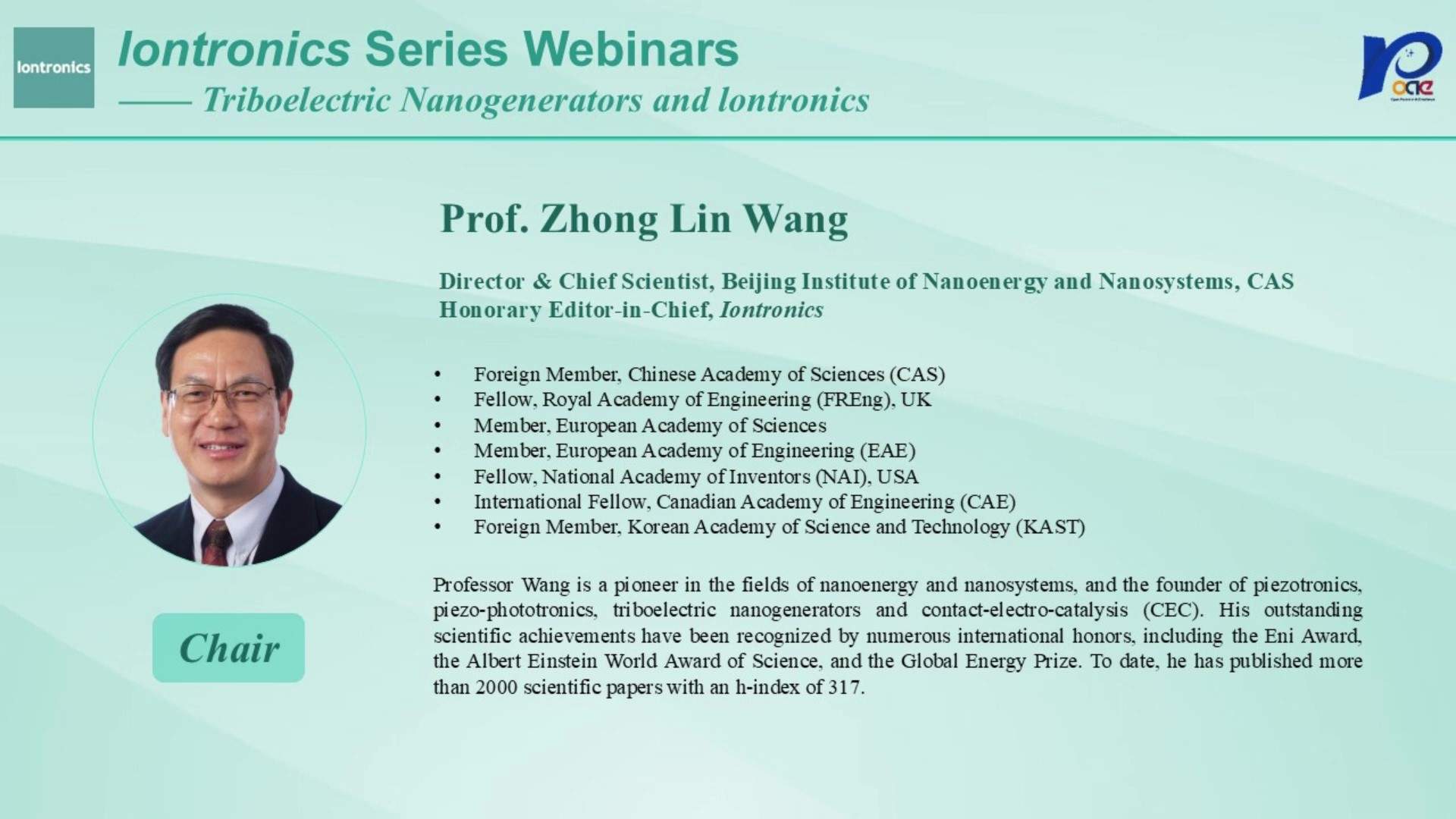
Prof. Zhong Lin Wang
- Director and Chief Scientist, Beijing Institute of Nanoenergy and Nanosystems, Chinese Academy of Sciences
- Foreign Member, Chinese Academy of Sciences
- Fellow, Royal Academy of Engineering, UK
- Fellow, U.S. National Academy of Inventors
- International Fellow, Canadian Academy of Engineering
- Laureate, Global Energy Prize, Eni Award, and Albert Einstein World Award of Science
- Honorary Editor-in-Chief, Iontronics
His research has advanced triboelectric and piezoelectric energy conversion, self-powered sensing, wearable electronics, robotics, the Internet of Things, artificial intelligence, and large-scale blue-energy harvesting. He has also made foundational contributions to the understanding of contact electrification and interfacial charge transfer, providing an important scientific basis for triboelectric nanogenerators and emerging triboelectric iontronics.
According to Scopus, Prof. Wang has authored more than 3,100 indexed documents, receiving over 451,000 citations, with an h-index of 317 as of August 2026.
Speaker(s)
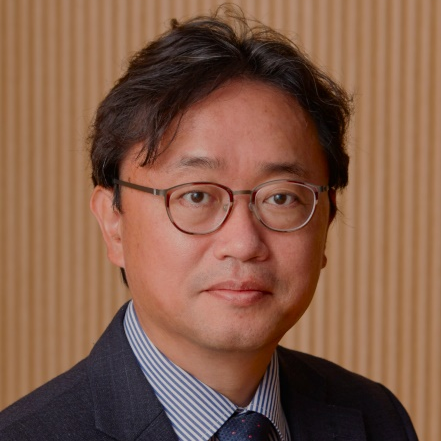
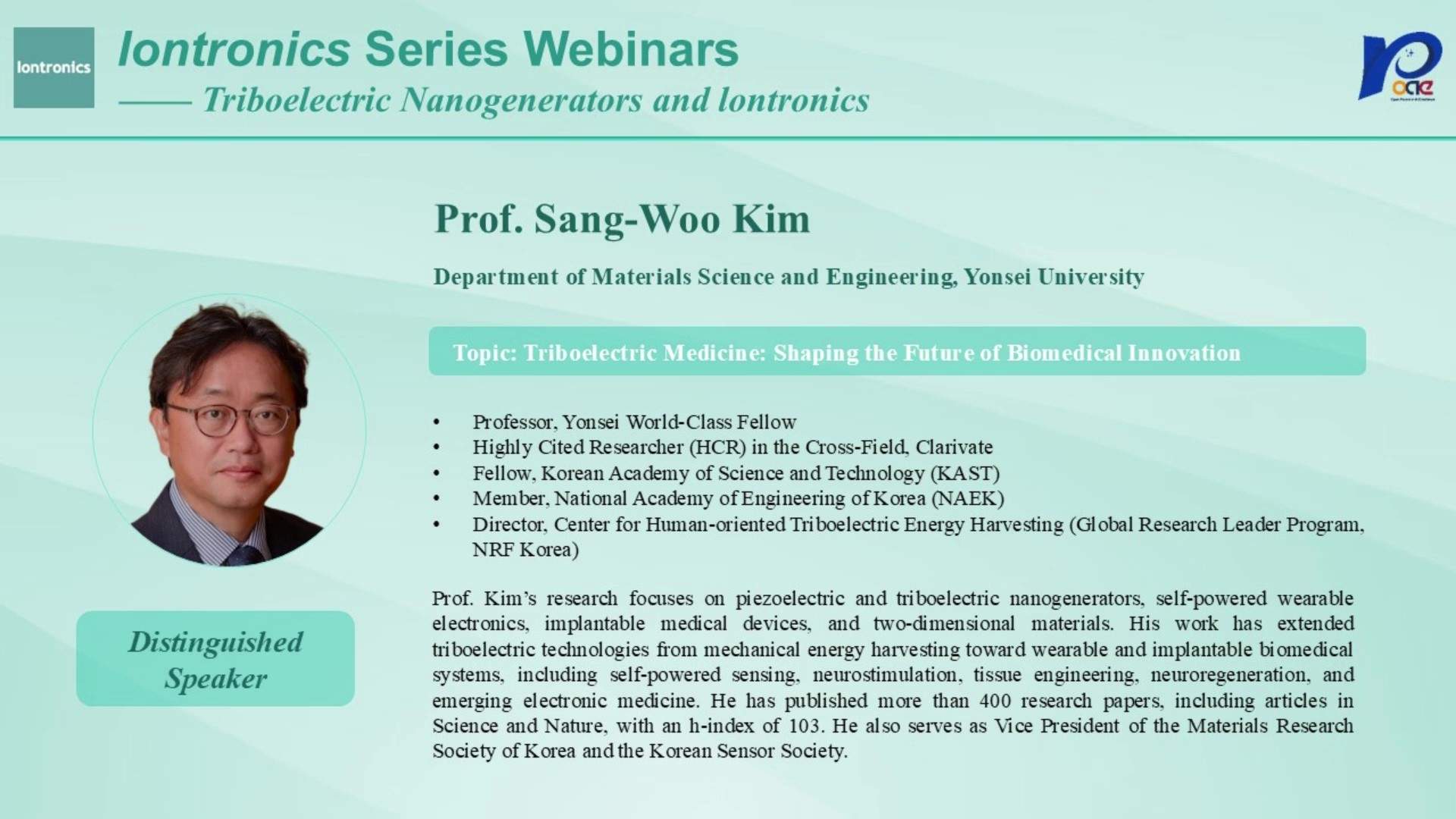
Prof. Sang-Woo Kim
- Professor, Yonsei World-Class Fellow
- Highly Cited Researcher (HCR) in the Cross-Field, Clarivate
- Fellow, Korean Academy of Science and Technology (KAST)
- Member, National Academy of Engineering of Korea (NAEK)
- Director, Center for Human-oriented Triboelectric Energy Harvesting (Global Research Leader Program, NRF Korea)
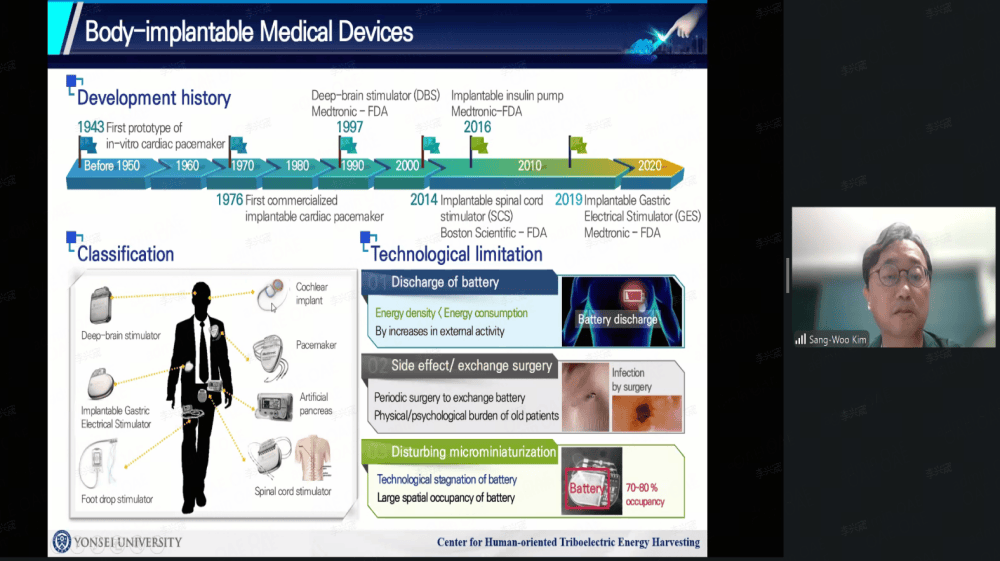
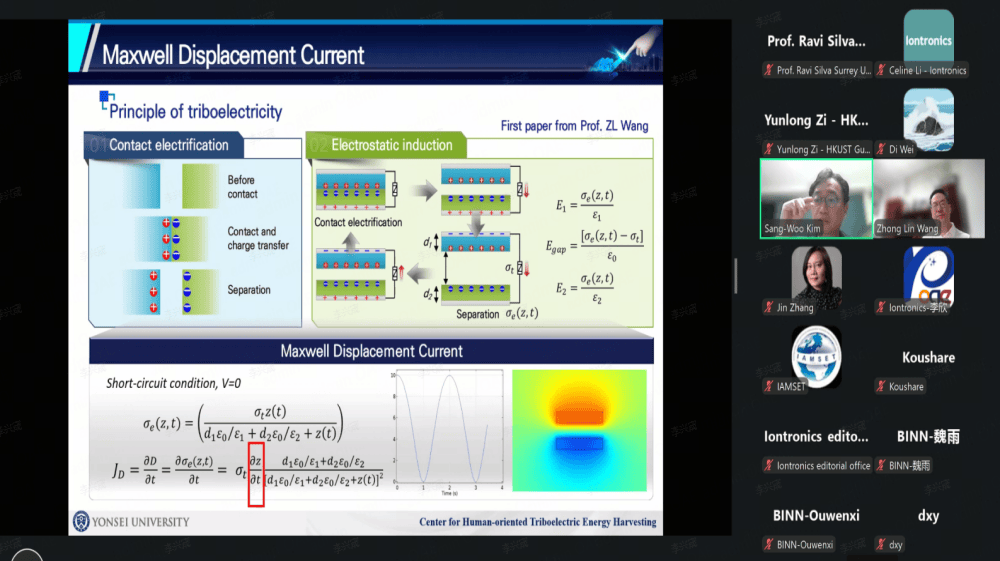
Topic: Triboelectric Medicine: Shaping the Future of Biomedical Innovation
Abstract: Triboelectric energy harvesting technologies have emerged as a promising energy solution for medical implants, utilizing various mechanical energy sources to generate electricity in vivo. Owing to their simple structure, which is advantageous for miniaturization, triboelectric nanogenerators (TENGs) have been extensively investigated. In this talk, I will introduce self-powered medical implants driven by the triboelectric mechanism and provide an overview of recent research trends. First, I will discuss the diverse device structures and energy generation performances of TENGs depending on their mechanical energy sources, which span a wide range of frequencies. In general, devices powered by high-frequency energy sources demonstrate superior electrical outputs compared to those operating at low frequencies. However, current technologies still fall short of satisfying the energy consumption requirements necessary for the immediate application of commercial electronic medicines. To address this challenge, I will present material design strategies aimed at enhancing the output performance of TENGs. Beyond serving as mere power sources, TENG-based battery-less electronic medicines hold significant potential for diverse clinical applications. This talk will also highlight our previous work on self-powered electronic medicines (termed triboelectric medicine) for use in wound healing, tissue engineering, neurostimulation, neuroregeneration, and antibacterial treatments.
He has published more than 400 research papers, including articles in Science and Nature, and has an h-index of 103. He also serves as Vice President of the Materials Research Society of Korea and Vice President of the Korean Sensor Society.
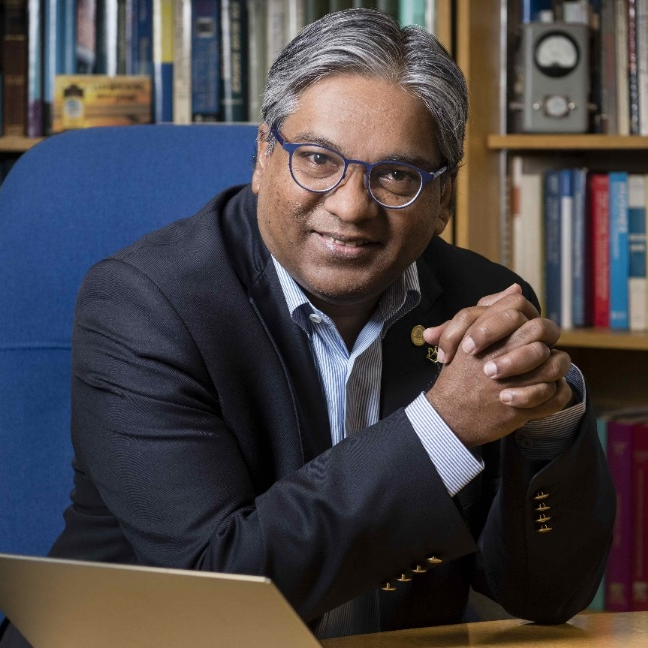
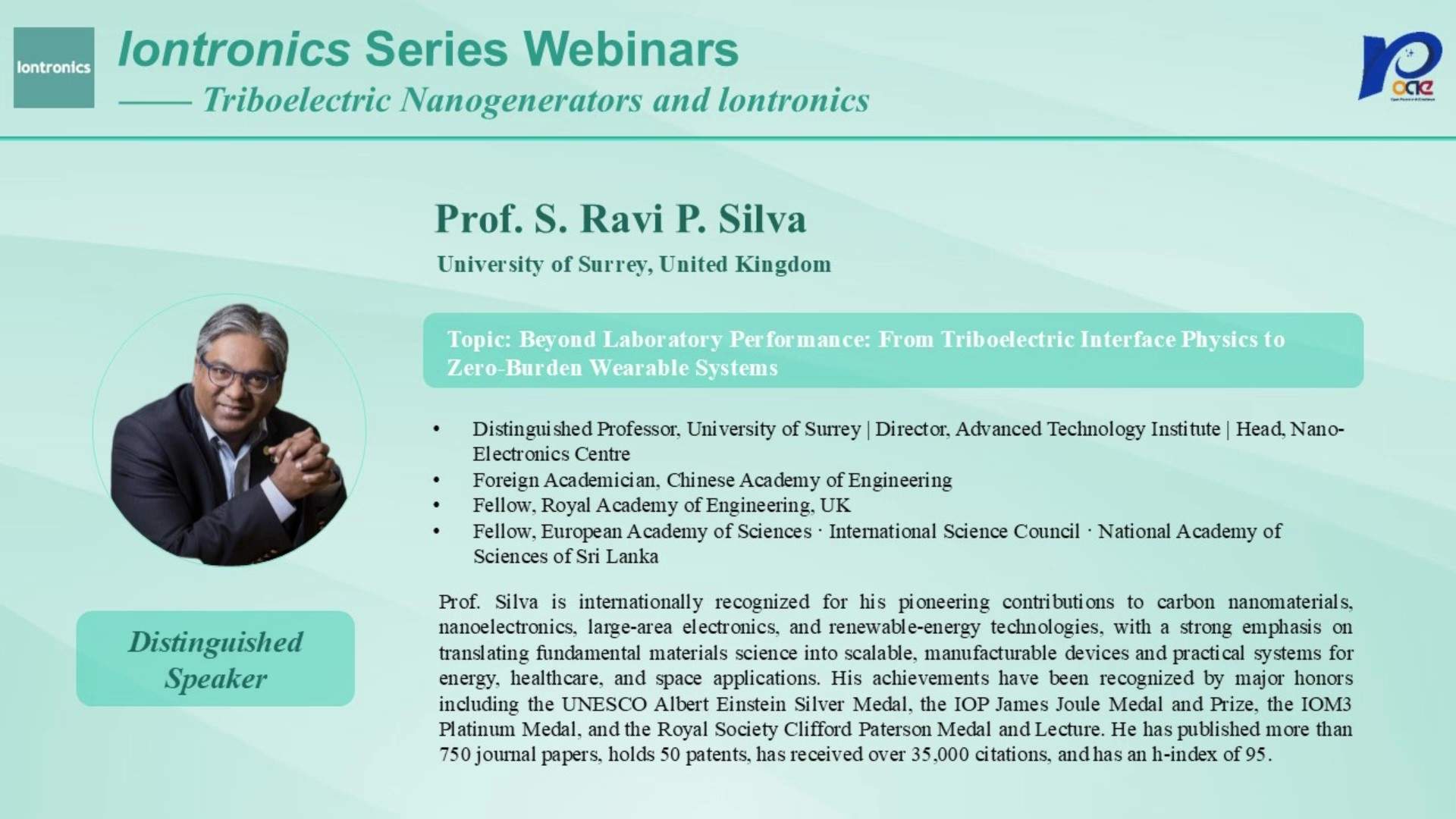
Prof. S. Ravi P. Silva CBE FREng FCAE FEurASc FISC FNASSL
- Distinguished Professor, University of Surrey
- Director, Advanced Technology Institute
- Head, Nano-Electronics Centre
- Foreign Academician, Chinese Academy of Engineering
- Fellow, Royal Academy of Engineering, UK
- Fellow, International Science Council
- Fellow, European Academy of Sciences
- Fellow, National Academy of Sciences of Sri Lanka
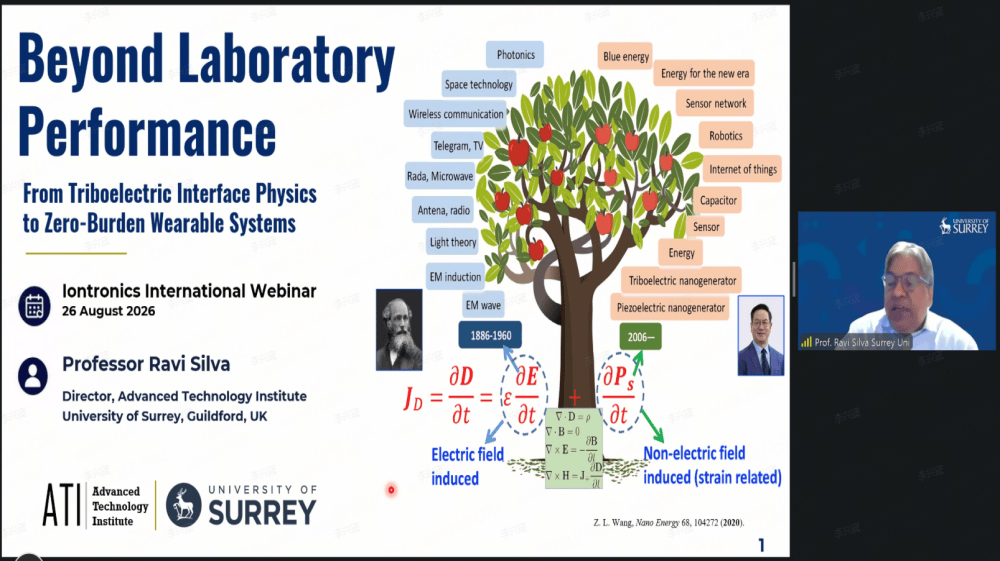
Topic: Beyond Laboratory Performance: From Triboelectric Interface Physics to Zero-Burden Wearable Systems
Abstract: Triboelectricity is emerging as more than an energy-harvesting mechanism, providing a powerful interface between materials, mechanical interaction and intelligent electronic systems. This talk examines the evolution of triboelectric nanogenerators from fundamental contact electrification and electrodynamic principles towards predictive device engineering, efficient power transfer and self-powered sensing. Particular emphasis is placed on how electric-field modelling, impedance-informed optimisation and rational materials and interface engineering can move the field beyond empirical demonstrations and peak-output metrics. The wider challenge is to translate these principles into scalable, sustainable and reliable technologies capable of operating in complex real-world environments. Examples spanning functional materials, wearable physiological monitoring and Z-PULSE healthcare technologies illustrate this progression. Looking forward, the convergence of triboelectric, iontronic and semiconductor technologies with artificial intelligence offers new opportunities for autonomous, adaptive and information-rich interfaces.
His research has contributed to the low-temperature growth of carbon nanotubes, high-performance large-area X-ray detectors, nanotube–organic solar cells, perovskite photovoltaics, and other emerging energy and electronic technologies. A defining feature of his work is the translation of advanced materials from laboratory discovery into manufacturable devices and practical systems with wider societal and environmental impact.
His contributions have been recognized through major distinctions including the UNESCO Albert Einstein Silver Medal, Institute of Physics (IOP) James Joule Medal and Prize, the Platinum Medal of the Institute of Materials, Minerals and Mining (IOM3), the Institute of Engineering and Technology (IET) J. J. Thomson Medal, and the Clifford Paterson Medal and Lecture of the Royal Society. He was appointed Commander of the Order of the British Empire (CBE) in the 2021 Queen’s New Year Honours for services to science, education, and research.
Prof. Silva has authored more than 750 journal papers, delivered over 720 international conference presentations, and is an inventor on 50 patents. His work has received more than 35,000 citations, with an h-index of 95.
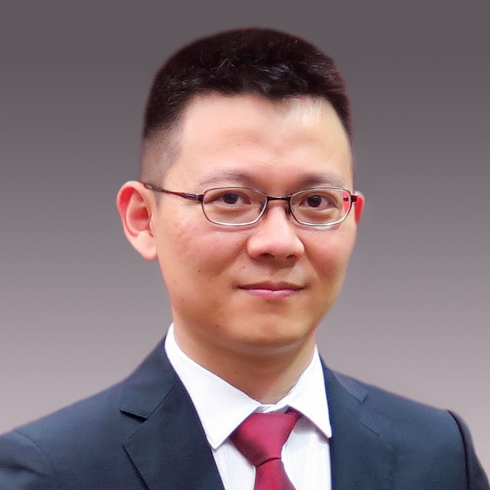
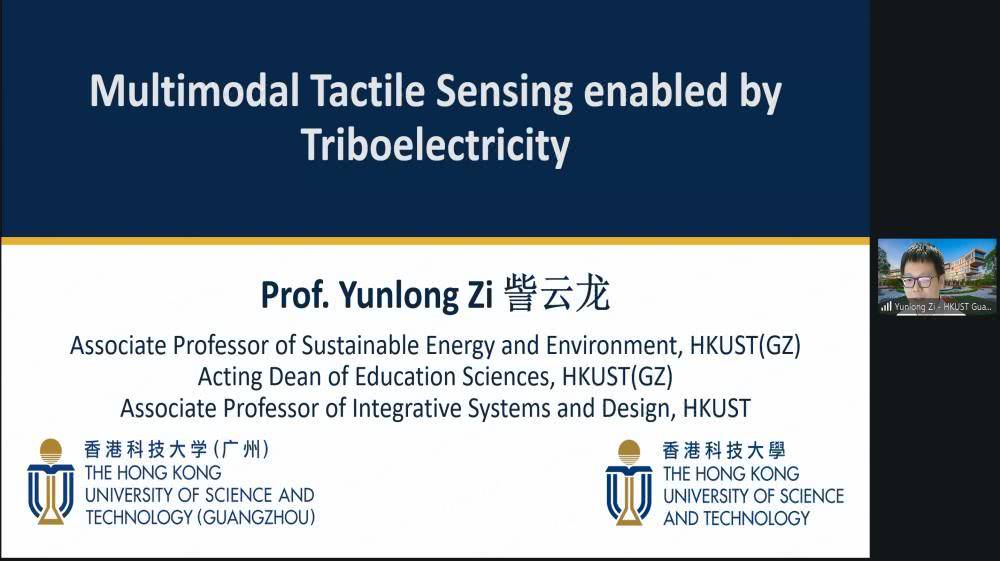
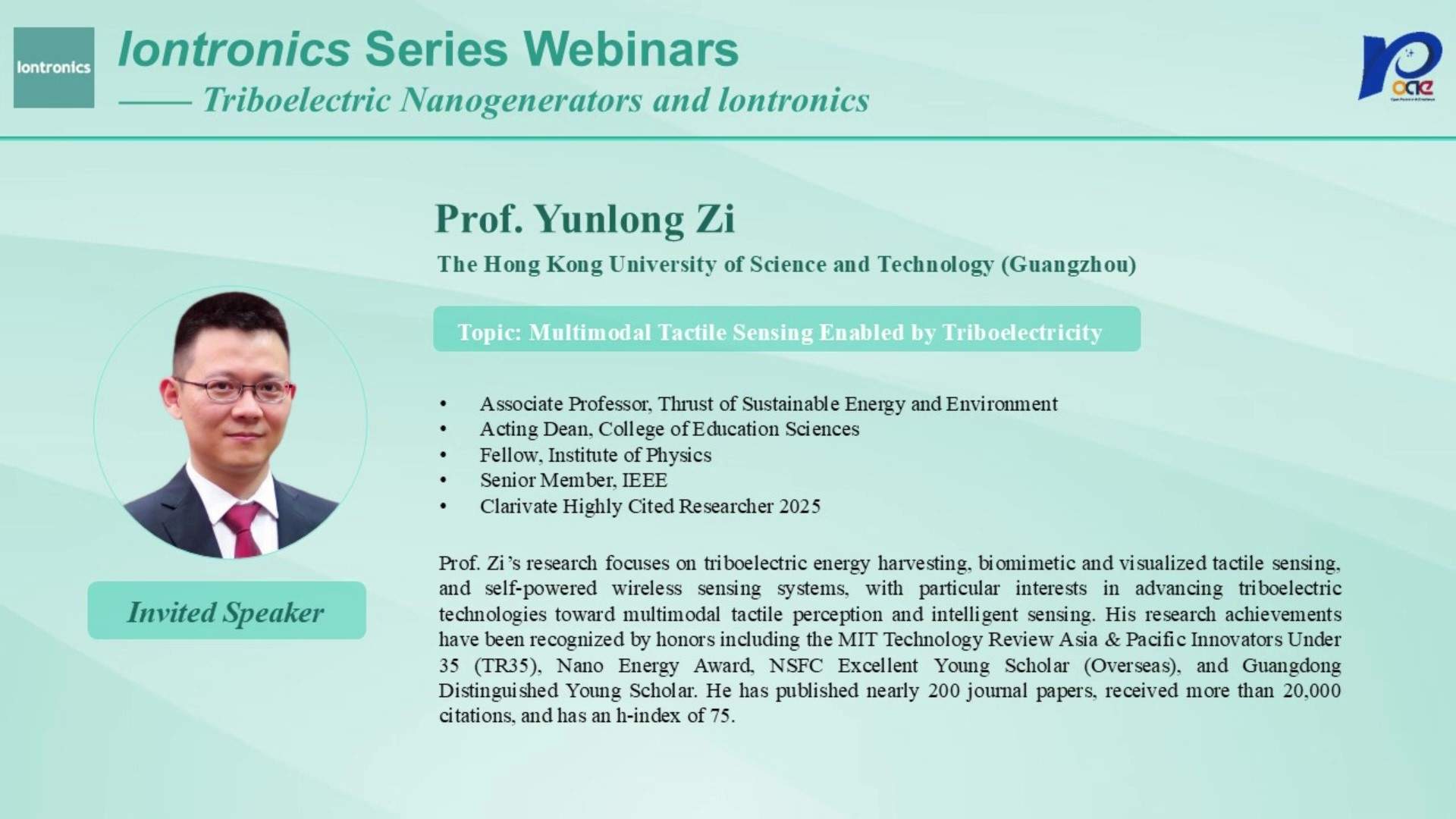
Prof. Yunlong Zi
- Associate Professor, Thrust of Sustainable Energy and Environment
- Acting Dean, College of Education Sciences
- Fellow, Institute of Physics
- Senior Member, IEEE
- Clarivate Highly Cited Researcher 2025
Topic: Multimodal Tactile Sensing Enabled by Triboelectricity
Abstract: While tactile sensing is fundamental for embodied intelligence to physically interact with and understand the world, its complex and multimodal nature remains significantly underexplored compared with vision, hearing, and other types of sensing. A major challenge lies in the wide range of information involved, including force and pressure, softness, friction, surface roughness, and temperature.
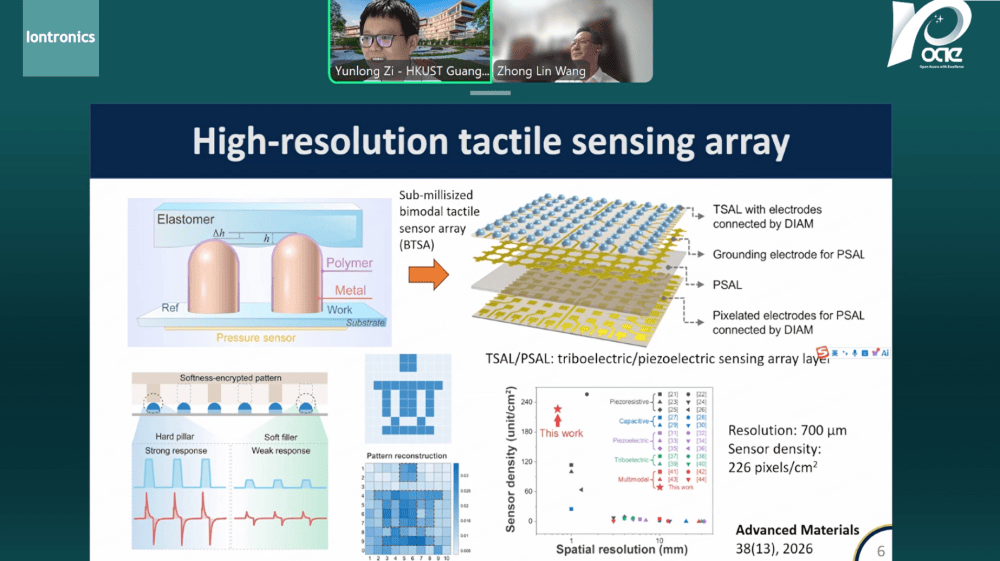
As triboelectrification, or contact electrification, naturally originates from tactile interactions, it may provide a paradigm-shifting strategy for multimodal tactile sensing. Prof. Zi's team has developed a hemispherical bimodal intelligent tactile sensor array based on the triboelectric effect, capable of softness identification, modulus quantification, and material-type recognition.
The team has also employed triboelectrically induced electroluminescence to visualize tactile information with enhanced brightness and a low detection limit. In addition, a self-powered electrotactile textile haptic glove based on the triboelectric-discharge effect has been developed to reproduce high-resolution tactile information.
The presentation will discuss these advances and the multidisciplinary opportunities for developing high-resolution, multimodal tactile sensing and feedback systems toward embodied intelligence.
He received his PhD in Physics from Purdue University in 2014 and his Bachelor of Engineering in Materials Science and Engineering from Tsinghua University in 2009. Before joining HKUST, he served as an Assistant Professor at the Chinese University of Hong Kong from 2017 to 2022 and conducted postdoctoral research at the Georgia Institute of Technology from 2014 to 2017.
His current research focuses on triboelectric energy harvesting, biomimetic tactile sensing, visualized tactile sensing, and self-powered wireless sensing systems. He has published nearly 200 journal articles, receiving more than 20,000 citations with an h-index of 75.
His honors include Clarivate Highly Cited Researcher 2025, the inaugural HKUST(GZ) Lionel M. Ni and Yin Ching Outstanding Teaching Award 2025, inclusion in the Elsevier/Stanford Career-long Scientific Impact List in 2024 and 2025, Fellowship of the Institute of Physics, the NSFC Excellent Young Scientists Fund (Overseas), Guangdong Distinguished Young Scholar, MIT Technology Review Asia-Pacific Innovators Under 35, the Nano Energy Award, and the MRS Postdoctoral Award.
Introduction
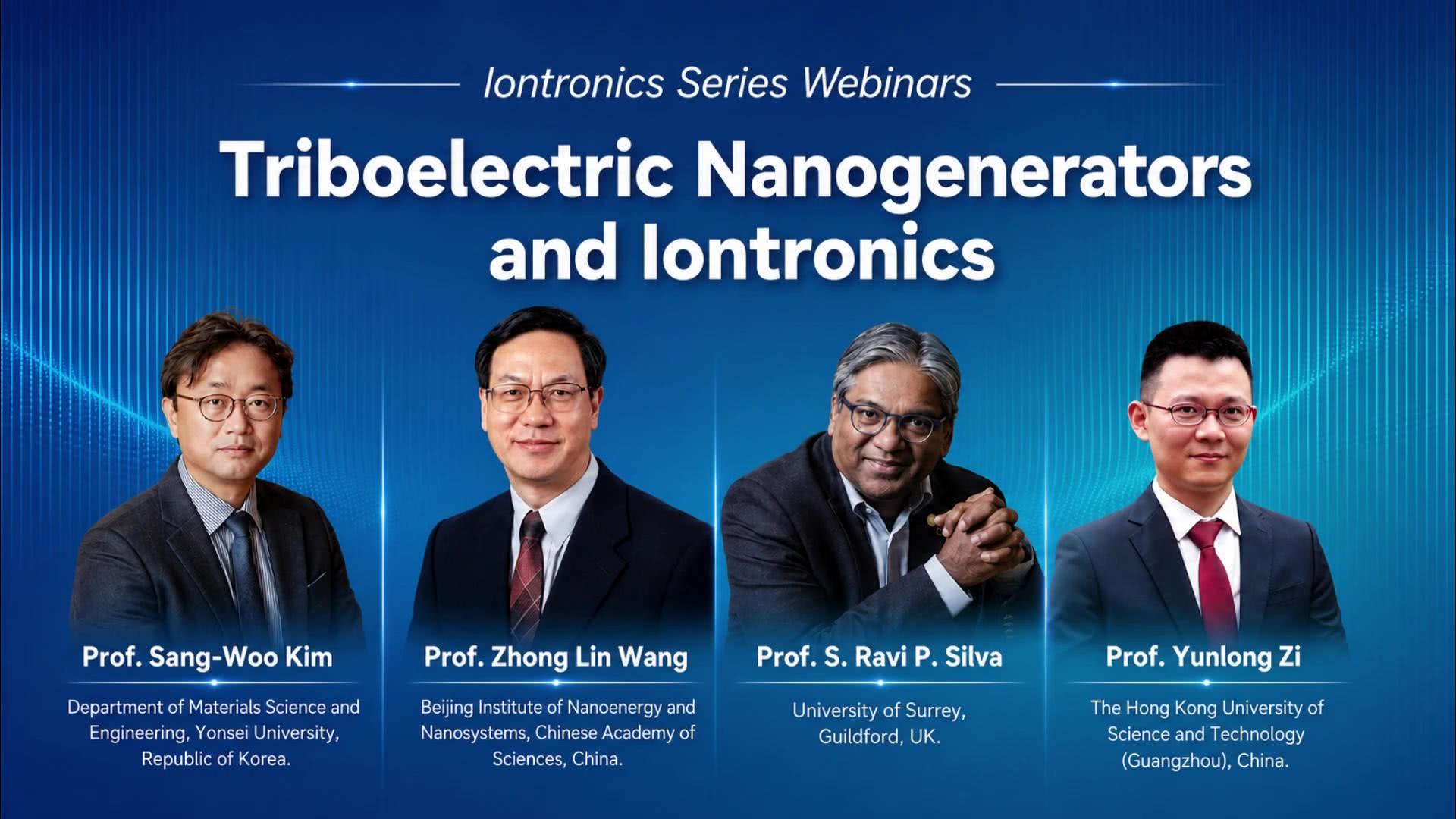
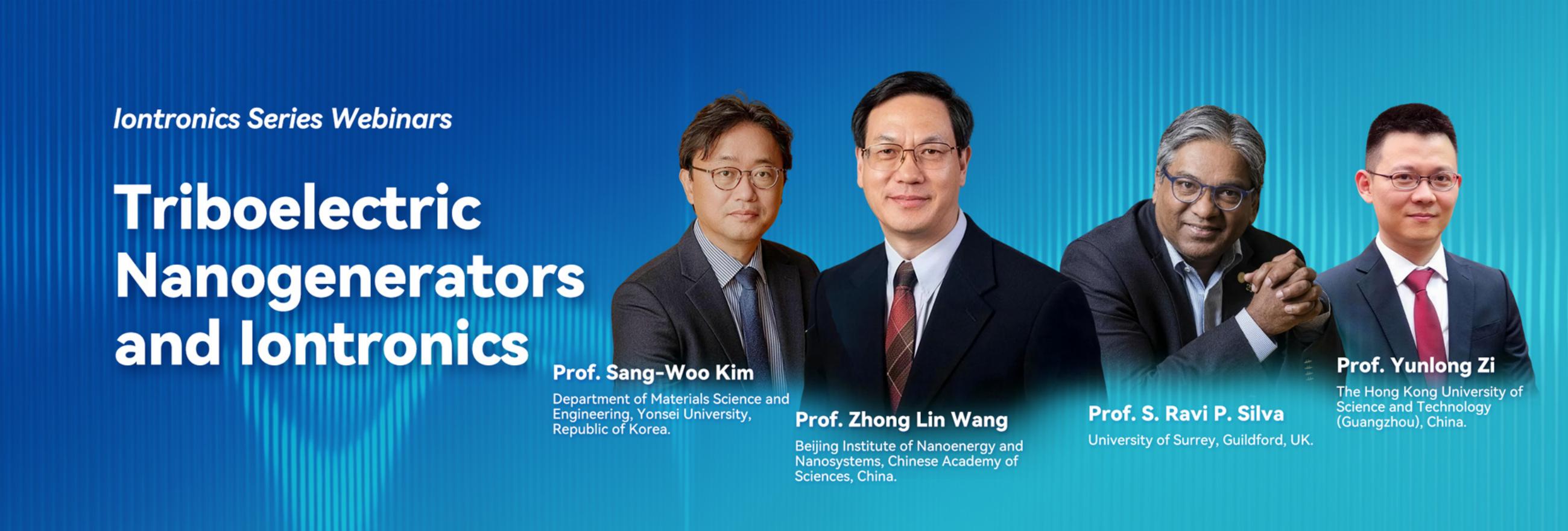
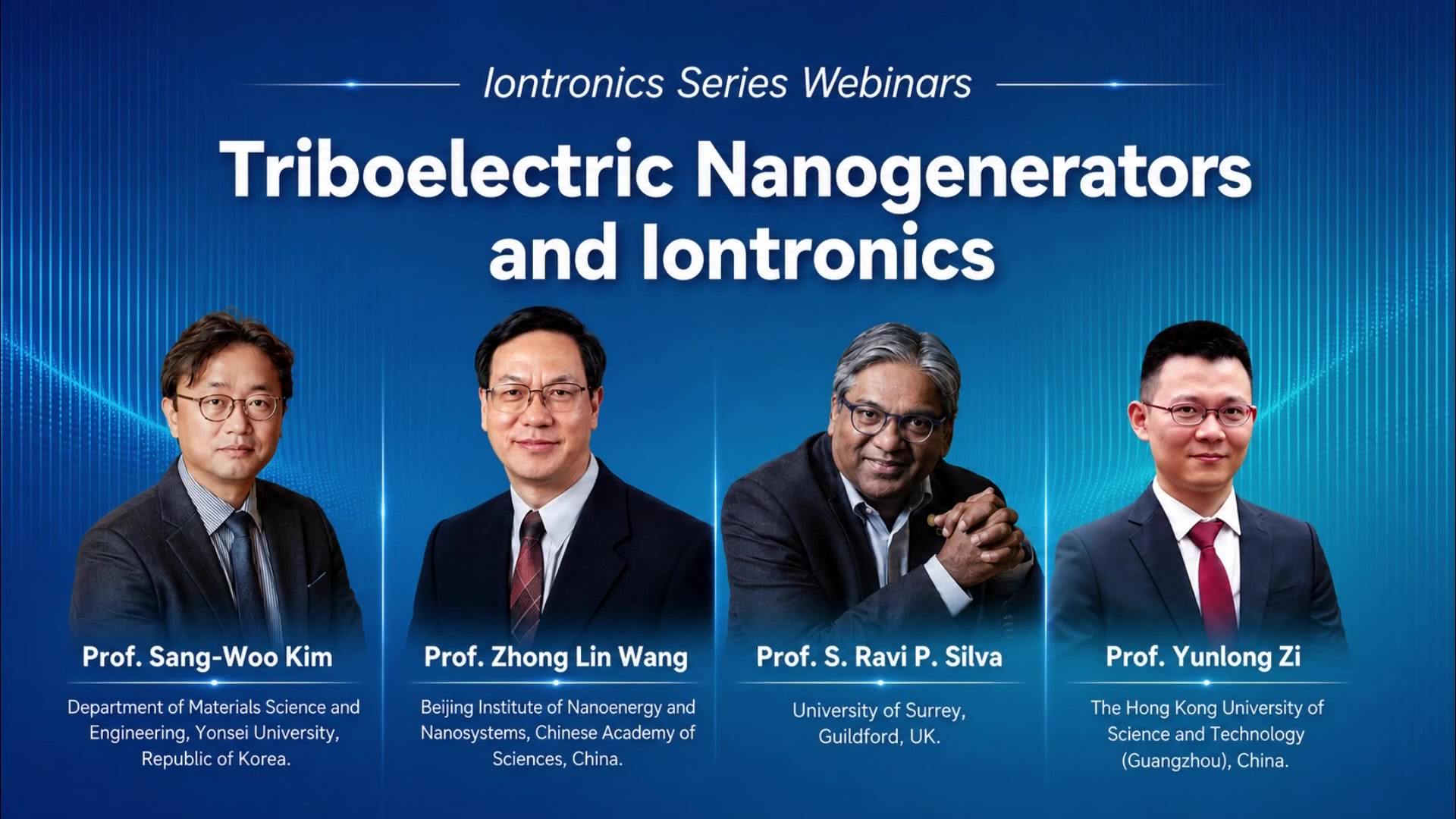
Chaired by Prof. Zhong Lin Wang, this international webinar will bring together leading scientists to discuss advances in triboelectric nanogenerators and their emerging convergence with iontronics, from fundamental charge-transfer mechanisms and functional materials to biointegrated devices and embodied intelligence.
Beijing/Hong Kong Time, UTC+8
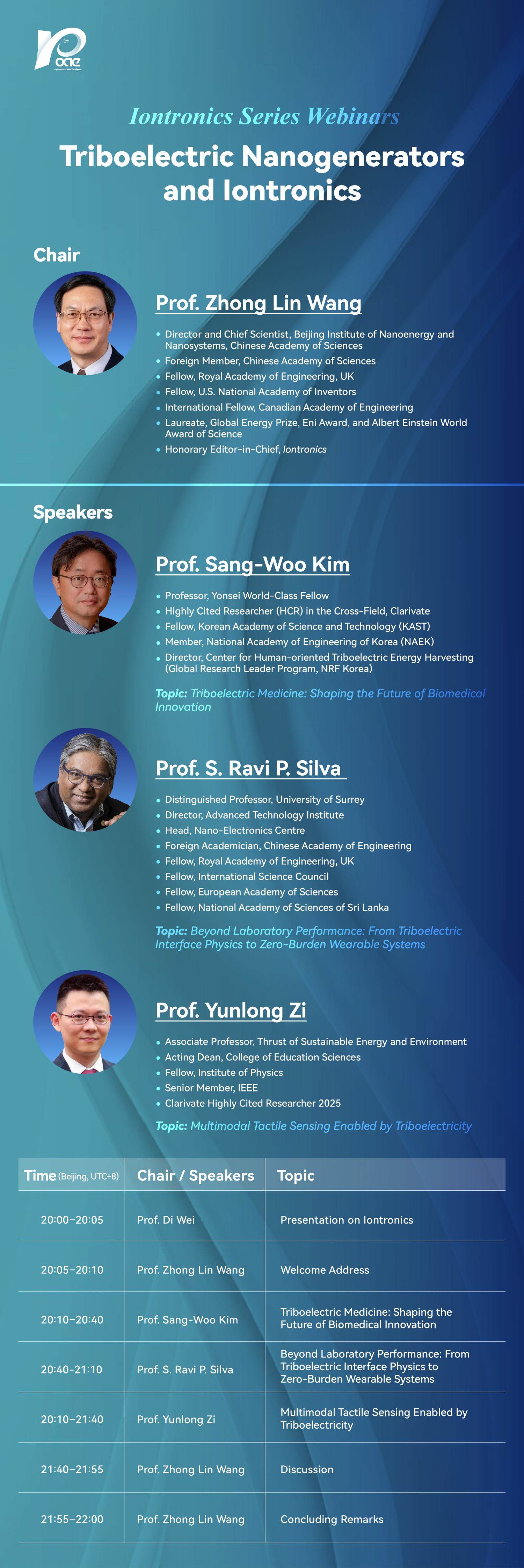
| Time (Beijing Time, UTC+8) | Chair/Speakers | Topic |
|---|---|---|
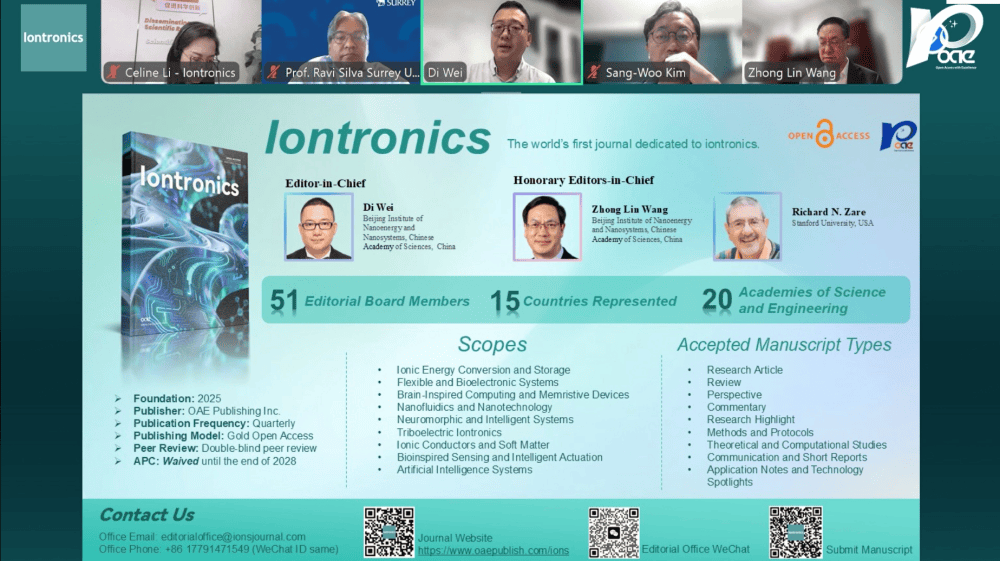
| 20:00–20:05 | Prof. Di Wei | Presentation on Iontronics |
| 20:05–20:10 | Prof. Zhong Lin Wang | Welcome Address |
| 20:10–20:40 | Prof. Sang-Woo Kim | Triboelectric Medicine: Shaping the Future of Biomedical Innovation |
| 20:40–21:10 | Prof. S. Ravi P. Silva | Beyond Laboratory Performance: From Triboelectric Interface Physics to Zero-Burden Wearable Systems |
| 21:10–21:40 | Prof. Yunlong Zi | Multimodal Tactile Sensing Enabled by Triboelectricity |
| 21:40–21:55 | Prof. Zhong Lin Wang | Discussion |
| 21:55–22:00 | Prof. Zhong Lin Wang | Concluding Remarks |
Moments
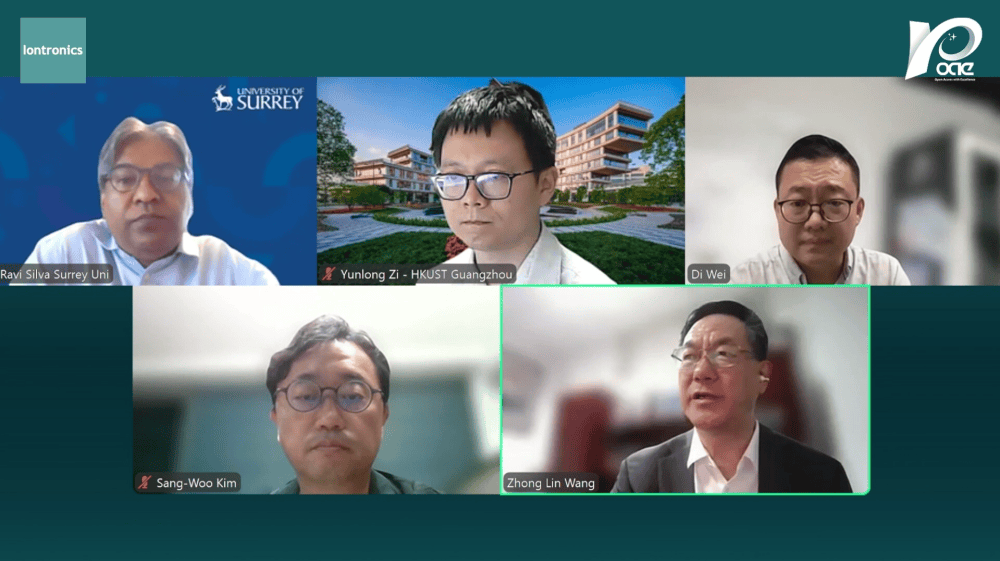
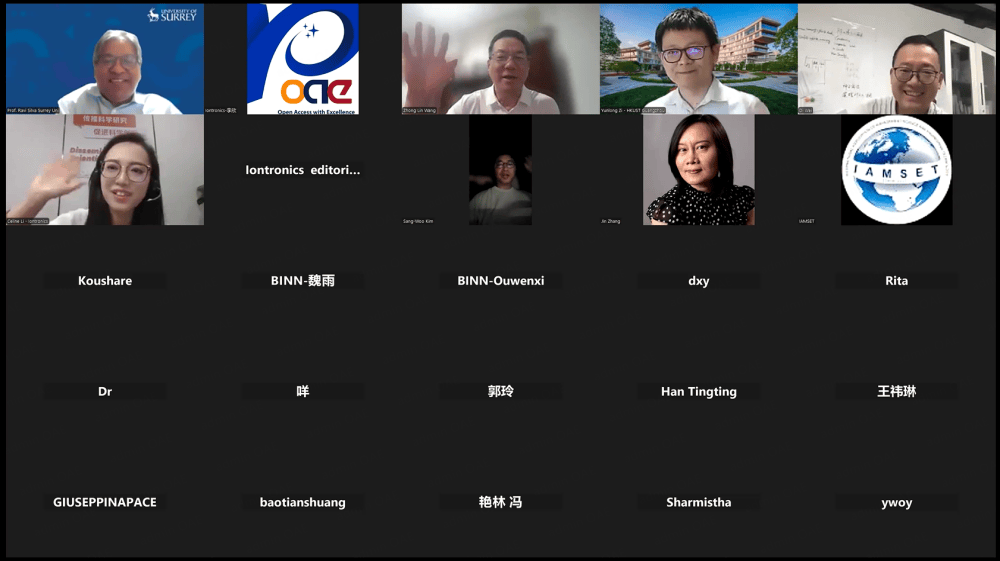
Presentation
Prof. Di Wei
Opening Remarks & Introduction to Iontronics
Prof. Zhong Lin Wang
Welcome Address
Prof. Sang-Woo Kim
Topic: Triboelectric Medicine: Shaping the Future of Biomedical Innovation
Prof. S. Ravi P. Silva
Topic: Beyond Laboratory Performance: From Triboelectric Interface Physics to Zero-Burden Wearable Systems
Prof. Yunlong Zi
Topic: Multimodal Tactile Sensing Enabled by Triboelectricity