Time
October 14, 2026 11:00 AM - 12:00 PM (CEST, Italy)
October 14, 2026 5:00 PM - 6:00 PM (CST, China)
October 14, 2026 5:00 PM - 6:00 PM (CST, China)
Join the Webinar
Zoom link of the webinar: https://us06web.zoom.us/j/83851005815?pwd=9xsF1t3w6SSk8vlhvFFK2aP8tDFRRk.1
ID: 838 5100 5815
Password: 381564
ID: 838 5100 5815
Password: 381564
Moderator
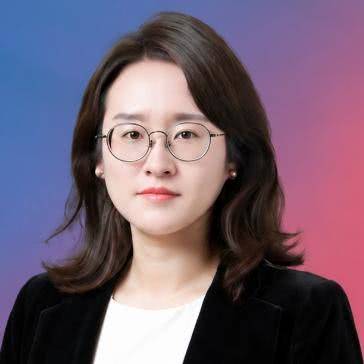
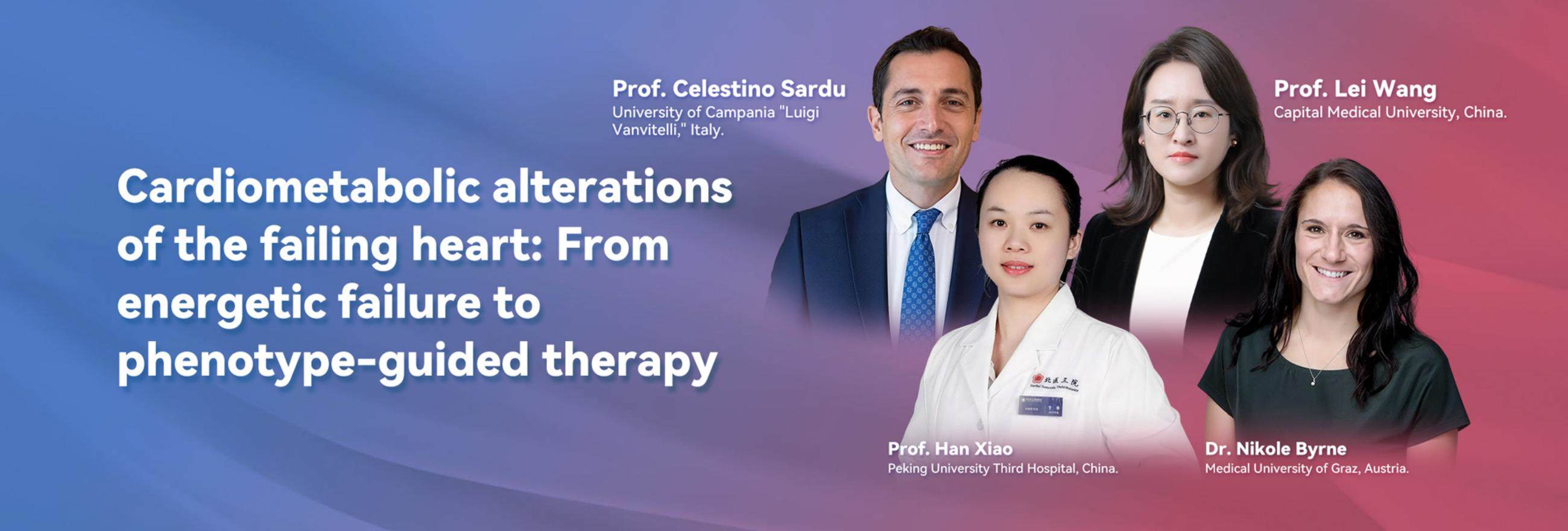
Prof. Lei Wang
School of Public Health, Capital Medical University, Beijing, China.
Prof. Lei Wang from the School of Public Health, Capital Medical University, has long focused on the mechanisms and translational research of dysregulated signaling pathways involving damage-associated molecular patterns (DAMPs), such as metabolites and inflammatory mediators, and their coupled GPCRs in cardiovascular diseases. She has served as principal investigator of the Young Scientists Fund and General Program of the National Natural Science Foundation of China, as well as an organized research project supported by the Capital Medical Science Innovation Center, and has also been a core member of a National Science and Technology Major Project. In recent years, she has published multiple SCI papers as first or corresponding author (including co-corresponding author) in leading journals such as Circulation, European Heart Journal, Hypertension, Cardiovascular Diabetology, and Nature Communications. She also serves as a reviewer for Circulation and has contributed as associate editor or editorial board member to several monographs and expert consensus statements. She was selected for the Beijing Overseas High-Level Talent Program.
Speaker
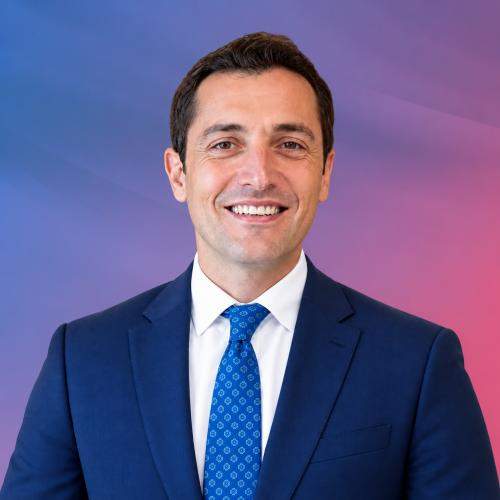
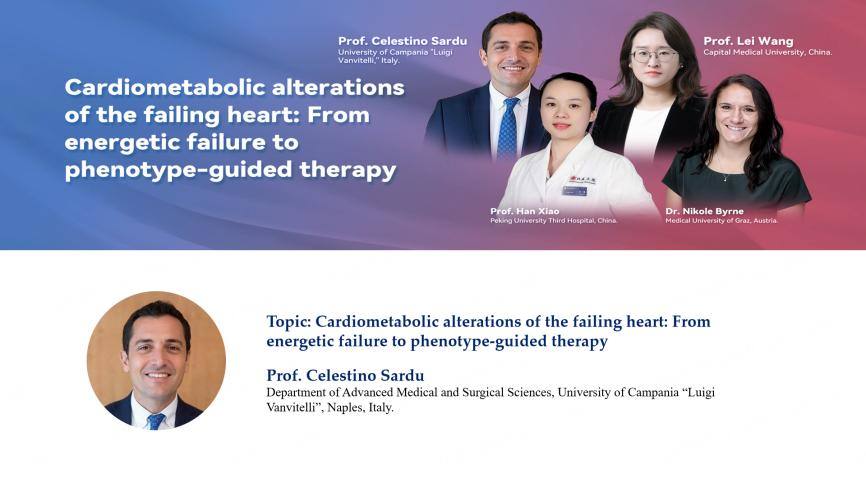
Prof. Celestino Sardu
Department of Advanced Medical and Surgical Sciences, University of Campania “Luigi Vanvitelli”, Naples, Italy.
Topic: Cardiometabolic alterations of the failing heart: From energetic failure to phenotype-guided therapy
Topic: Cardiometabolic alterations of the failing heart: From energetic failure to phenotype-guided therapy
Prof. Celestino Sardu is an Associate Professor at the University of Campania "Luigi Vanvitelli," Italy. His research focuses on heart failure, cardiac arrhythmias, cardiac resynchronization therapy (CRT), cardiovascular devices, ischemic heart disease, and cardiometabolic remodeling. He has published more than 190 scientific papers in international journals and has received research awards and funding from the European Society of Cardiology (ESC). In 2025, he was recognized among the World’s Top 2% Scientists.
Discussant(s)
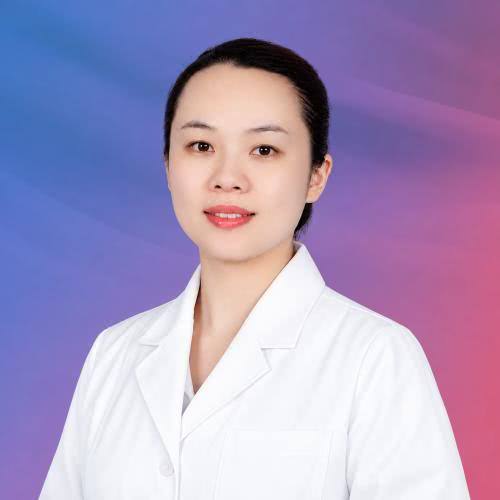
Prof. Han Xiao
Department of Cardiology and Institute of Vascular Medicine, Peking University Third Hospital, Beijing, China.
Prof. Han Xiao obtained her MD and PhD from Peking University in 2008, subsequently undertaking postdoctoral research at the University of California, Riverside. Her work primarily investigates inflammatory mechanisms underlying cardiac remodelling and explores novel therapeutic approaches. Recently, she has focused on adrenergic signalling in cardiac remodelling, elucidating molecular mechanisms of sympathetic stress-induced cardiac injury and identifying potential therapies to mitigate such damage. Professor Xiao's research has been published in leading journals including Circulation, Circulation Research, and European Heart Journal. She has received funding from the National Science Fund for Outstanding Young Scholars and the Key Program of the National Natural Science Foundation of China. Currently, she serves as Deputy Secretary-General of the Chinese Section of the International Society for Heart Research (ISHR).
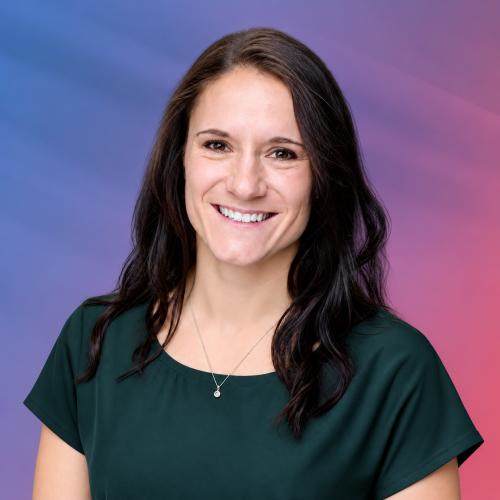
Dr. Nikole Byrne
Department of Physiology, Medical University of Graz, Graz, Austria.
Dr. Nikole J. Byrne is a cardiovascular researcher at the Medical University of Graz, Austria. She received her PhD from the University of Alberta, Canada, where her doctoral research focused on cardiac energy metabolism and the therapeutic effects of SGLT2 inhibitors in heart failure. Since joining the Medical University of Graz in 2020, her work has focused on cardiometabolic disease, with particular emphasis on mitochondrial metabolism, sirtuin signaling, inflammation, and metabolic remodeling in heart failure and atherosclerosis.
Dr. Byrne has published extensively in cardiovascular and metabolic research, with first-author studies in Circulation: Heart Failure, JACC: Basic to Translational Science, Cardiovascular Research, and Acta Physiologica. Her work has investigated cardiac energy metabolism, SGLT2 inhibition, ketone metabolism, and the roles of mitochondrial sirtuins in heart failure and ischemic heart disease. Her current research investigates NAD+ metabolism as a therapeutic target in cardiovascular disease, including the potential of nicotinamide mononucleotide supplementation to attenuate atherosclerosis. Her work has been supported by competitive fellowships and grants, including the Peter und Traudl Engelhorn Foundation Postdoctoral Fellowship and an Austrian Society of Cardiology (ÖKG) Project Grant. She has received several research awards, including the 2026 ÖKG Best Basic Science Abstract Award and the Society for Heart and Vascular Metabolism "William C. Stanley" Early Investigator Award.
Dr. Byrne has published extensively in cardiovascular and metabolic research, with first-author studies in Circulation: Heart Failure, JACC: Basic to Translational Science, Cardiovascular Research, and Acta Physiologica. Her work has investigated cardiac energy metabolism, SGLT2 inhibition, ketone metabolism, and the roles of mitochondrial sirtuins in heart failure and ischemic heart disease. Her current research investigates NAD+ metabolism as a therapeutic target in cardiovascular disease, including the potential of nicotinamide mononucleotide supplementation to attenuate atherosclerosis. Her work has been supported by competitive fellowships and grants, including the Peter und Traudl Engelhorn Foundation Postdoctoral Fellowship and an Austrian Society of Cardiology (ÖKG) Project Grant. She has received several research awards, including the 2026 ÖKG Best Basic Science Abstract Award and the Society for Heart and Vascular Metabolism "William C. Stanley" Early Investigator Award.
Programme
Programme
| Time (CST, China) | Speakers | Topics |
|---|---|---|
| 5:00 PM – 5:05 PM | Prof. Lei Wang | Introduction – A brief overview on this topic and journal introduction |
| 5:05 PM – 5:35 PM | Prof. Celestino Sardu | Cardiometabolic alterations of the failing heart: From energetic failure to phenotype-guided therapy |
| 5:35 PM – 5:55 PM | Prof. Lei Wang | Discussion (Q&A session, All) |
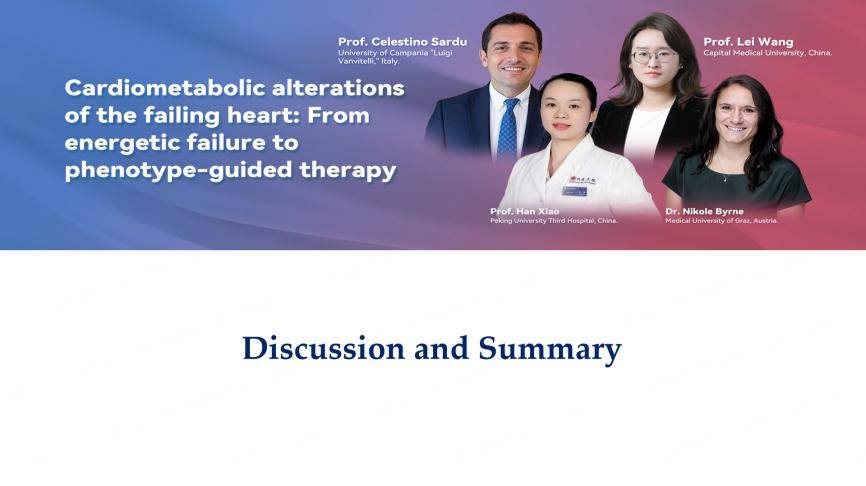
| 5:55 PM – 6:00 PM | Prof. Lei Wang | Summary and Acknowledgement |
Presentation
NaN
NaN